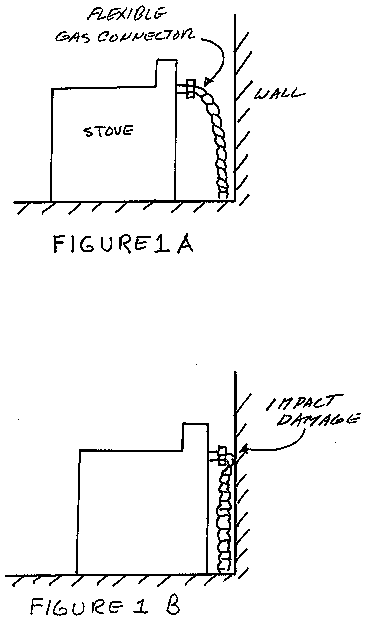
FIGURE 1
away from the wall for cleaning purposes. After cleaning, the stove is shoved back against the wall. In certain stoves, the flexible gas connector end fitting is protruding from the back of the stove and impacts the wall as shown in Figure 1B. This cycle can occur over several years resulting in crack formation in the brass flexible connector or in loosening of the end fitting.
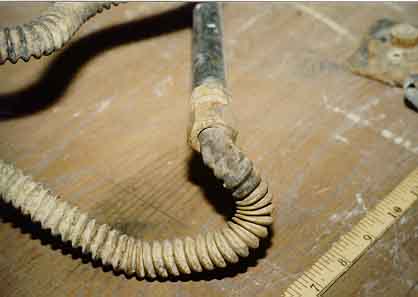
FIGURE 2
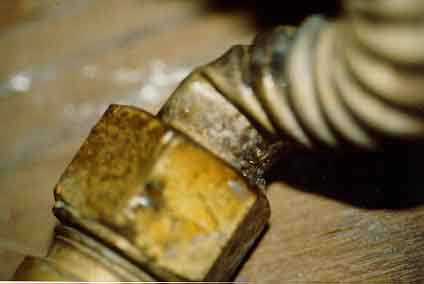
FIGURE 3
Figure 2 is a view of a flexible gas connector removed from a home after an explosion had occurred. The connector and stove were over 20 years old. The homeowner had, repeatedly over the years, cleaned behind the stove by moving it out and then shoving it back against the wall. Figure 2 shows the connector after removal from the stove. Figure 3 is a close-up of the end damage to the fitting. The impact with the wall had crimped the tubing, causing a crack and leakage.
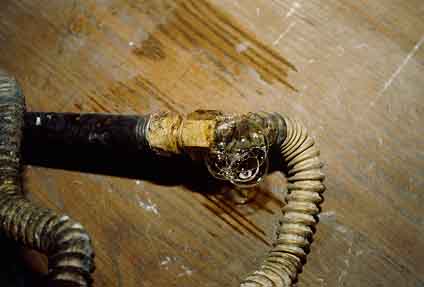
FIGURE 4
Figure 4 shows the soap solution pressure test. The crack was verified to be in the brass tubing at a crimp formed from the impact damage.
After damage has occurred to flexible gas connectors, gas leakage can occur randomly. A small impact may initiate a crack, which can grow by fatigue or environmental influences and may not result in immediate leakage. Stress corrosion cracking or environmentally assisted cracking can be driven by ammonia used in typical household cleaning solutions. A substantial impact may result in immediate leakage, especially if the flare end fitting is damaged.
The above failure modes of flexible gas connectors due to impacts are common causes of gas explosions and fires. Since the damaged component is metallic, it often survives the loss and may contain valuable evidence as to the cause.
FOR TECHNICAL ARTICLES CONTACT CLAIMS MAGAZINE AND ASK
FOR A REPRINT OF A PAST TECHNICAL NOTEBOOK ARTICLE
CLAIMS MAGAZINE
BACK TO C. ROBERTS CONSULTING ENGINEERS HOME PAGE,
WWW.CROBERTS.COM
WWW.CROBERTS.COM